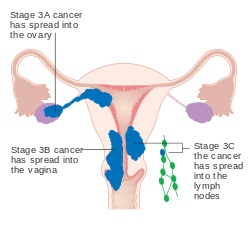
How Do I Know If I Have Endometrial Cancer : Uterine Cancer Diagnosis Stages Treatment Causes / When cancer cells do this, it's called metastasis.. The best way to find endometrial cancer when it's small (at an early stage) is to see a health care provider if you have any signs and symptoms of endometrial cancer, such as abnormal vaginal bleeding or discharge (that's getting worse, occurring between periods, or happening after menopause). If you have stage iv, the cancer cells have spread to parts of the body. Lower numbers mean that the cancer hasn't spread as much. Some common cancer signs that should result in a visit to the emergency room or to a doctor as soon as possible include: If any of the tests highlight abnormalities or indicate that cancer may have come back, further tests will be ordered.
The tissues removed during the biopsy are sent to a pathologist, who determines whether cancer cells are present. In the u.s., according to the estimation from the american cancer society, 63,230 new cases of uterine cancer will be reported in 2018. Doctors don't know what causes endometrial cancer. Your periods are getting longer and heavier than usual. If you have already undergone menopause, any bleeding — spotting included — should be evaluated.
Endometrial Cancer Wikipedia from upload.wikimedia.org In endometrial cancer, cancerous cells grow in the endometrium and if it isn't caught in time or if it is left untreated, there are high chances of. Vaginal bleeding during or after menopause is often a sign of a problem. This procedure takes a picture of the uterus to view tumors or abnormalities. More than 90% of women diagnosed with endometrial cancer experience irregular bleeding. If any of the tests highlight abnormalities or indicate that cancer may have come back, further tests will be ordered. I finished radiation in july 2020 and since it went from 20 to 44 and yesterday i found out it is now 86. There are four stages of endometrial cancer: Some common cancer signs that should result in a visit to the emergency room or to a doctor as soon as possible include:
The most likely symptoms are:
If uterine cancer spreads, it can spread to the following: In 2021, about 66,570 new uterine cancer cases are expected to be diagnosed in the united states, according to the american cancer society. The following can all be signs of endometrial hyperplasia: Here are 10 cancer symptoms that every woman should be on the lookout for. With a little research and understanding of the risks and warning signs, you can recognize the symptoms of uterine cancer. It most commonly occurs in women who are going through, or who have gone through, menopause. I, ii, iii, and iv. Lower numbers mean that the cancer hasn't spread as much. This includes a ct scan, ultrasound scan and a biopsy. Uterine cancer (also called endometrial cancer) is a serious condition that affects millions of women annually. I am stage 3 a which isn't great. What's known is that something occurs to create changes (mutations) in the dna of cells in the endometrium — the lining of the uterus. In the u.s., according to the estimation from the american cancer society, 63,230 new cases of uterine cancer will be reported in 2018.
To diagnose uterine cancer, your doctor will perform a transvaginal ultrasound. The same process for the original endometrial cancer diagnosis, will apply again. What's known is that something occurs to create changes (mutations) in the dna of cells in the endometrium — the lining of the uterus. My dr feels it's indicative of cancer. More than 90% of women diagnosed with endometrial cancer experience irregular bleeding.
What Is Endometrial Cancer Symptoms Stages Treatments And More from post.healthline.com If the uterus has become enlarged due to the cancer, you. Middle layer of the wall of the uterus (called the myometrium) Endometrial cancer involves the endometrium, the tissue that lines the uterus, and is by far the most frequently diagnosed type of uterine cancer. Tests that help evaluate uterine cancer before your diagnosis, your doctor took a biopsy from your uterus to help find out if you had uterine cancer. What's known is that something occurs to create changes (mutations) in the dna of cells in the endometrium — the lining of the uterus. Your periods are getting longer and heavier than usual. Uterine cancer (also called endometrial cancer) is a serious condition that affects millions of women annually. If you have symptoms or believe you may be at high risk for uterine cancer, your doctor may perform an endometrial biopsy or a transvaginal ultrasound.
I, ii, iii, and iv.
Lower numbers mean that the cancer hasn't spread as much. If any of the tests highlight abnormalities or indicate that cancer may have come back, further tests will be ordered. Read about preventing endometrial cancer. Some common cancer signs that should result in a visit to the emergency room or to a doctor as soon as possible include: Symptoms of uterine cancer that are different from uterine fibroids include abnormal vaginal bleeding (bleeding that is not part of a menstrual period, bleeding after menopause), or a mass in the vagina. The following can all be signs of endometrial hyperplasia: It most commonly occurs in women who are going through, or who have gone through, menopause. Healthy cells grow and multiply at a set rate, eventually dying at a set time. Symptoms of uterine cancer and uterine fibroids that are similar include pain or feeling of fullness in the abdomen or frequent urination. The most common symptom of womb cancer is abnormal bleeding from the vagina. Endometrial cancer involves the endometrium, the tissue that lines the uterus, and is by far the most frequently diagnosed type of uterine cancer. My dr feels it's indicative of cancer. Uterine cancer may also cause other symptoms, such as pain or pressure in your pelvis.
Doctors don't know what causes endometrial cancer. It is an overgrowth of abnormal cells, or it can develop from endometrial hyperplasia, which is an overgrowth of normal cells. I went into the appointment for the pathology results thinking i had ovarian cancer but didn't know what stage. Uterine cancer grows very slowly so it is easier to catch and control early if you go for regular checkups. What's known is that something occurs to create changes (mutations) in the dna of cells in the endometrium — the lining of the uterus.
Womb Cancer Symptoms What It S Like To Have Uterine Or Endometrial Cancer As A Young Woman By New Youtube from i.ytimg.com Your periods are getting longer and heavier than usual. Cancer cells can spread from the uterus to other parts of the body. Sometimes polyps that grow in the uterus will have atypical endometrial hyperplasia. More than 90% of women diagnosed with endometrial cancer experience irregular bleeding. What's known is that something occurs to create changes (mutations) in the dna of cells in the endometrium — the lining of the uterus. Your doctor will then conduct an endometrial biopsy. Endometrial cancer involves the endometrium, the tissue that lines the uterus, and is by far the most frequently diagnosed type of uterine cancer. Some common cancer signs that should result in a visit to the emergency room or to a doctor as soon as possible include:
The most likely symptoms are:
Healthy cells grow and multiply at a set rate, eventually dying at a set time. Uterine cancer grows very slowly so it is easier to catch and control early if you go for regular checkups. It most commonly occurs in women who are going through, or who have gone through, menopause. It is an overgrowth of abnormal cells, or it can develop from endometrial hyperplasia, which is an overgrowth of normal cells. This spread is called metastasis. If you have symptoms or believe you may be at high risk for uterine cancer, your doctor may perform an endometrial biopsy or a transvaginal ultrasound. If you have already undergone menopause, any bleeding — spotting included — should be evaluated. Symptoms of uterine cancer that are different from uterine fibroids include abnormal vaginal bleeding (bleeding that is not part of a menstrual period, bleeding after menopause), or a mass in the vagina. The ultrasound tech did not see the cancer in the uterus and i didn't have a uterine biopsy like it sounds you have. Uterine cancer is a form of cancer that develops in the uterus. What's known is that something occurs to create changes (mutations) in the dna of cells in the endometrium — the lining of the uterus. With a little research and understanding of the risks and warning signs, you can recognize the symptoms of uterine cancer. I finished radiation in july 2020 and since it went from 20 to 44 and yesterday i found out it is now 86.